

Last Updated: November 17, 2026
Quick Summary
Vegan leather typically lasts 2 to 5 years in daily use, while genuine leather can last 10 or more years with care. The exact lifespan depends on the material, construction and how intensively you use the item, so a thick, well-bonded PU over a tight woven backing lasts far longer than a thin coating.
- PU leather offers the best balance of flexibility and durability for everyday items.
- Thin PU coatings under 0.3 mm can crack or peel within a year of daily handling.
- PVC tends to crack rather than peel as plasticisers migrate out over time.
- Vegan leather is water-resistant, not waterproof, and heat above 40°C accelerates breakdown.
- Wipe PU with a damp microfibre cloth and never machine-wash vegan leather.
Table of Contents
- How Long Does Vegan Leather Last? The Short Answer
- Vegan Leather vs Genuine Leather: A Durability Comparison
- PU, PVC and Plant-Based: How Material Changes the Lifespan
- How Long Does Faux Leather Last by Product and Use Intensity?
- Does Vegan Leather Peel? Signs of Wear to Watch For
- Is Vegan Leather Waterproof? Moisture, Heat and British Weather
- Is Vegan Leather Good Quality? How to Judge It Before You Buy
- Care, Cleaning and Storage That Extend Lifespan
- Repair and End-of-Life Options for Worn Vegan Leather
- Choosing a Personalised Vegan Leather Case That Lasts
- Frequently Asked Questions
How Long Does Vegan Leather Last? The Short Answer
Vegan leather lifespan varies considerably with material, construction and use. This guide breaks that window down by material, product type and daily wear, because a wallet and a phone case do not age at the same rate. Vegan leather is a synthetic or plant-based material engineered to mimic animal hide, usually built from a fabric backing coated with a polymer surface. The coating does the protecting; the backing holds the shape. Get those two layers right and the material holds up well. Get them wrong and it fails within months.
Below, we explain what separates a case that survives daily handling from one that peels early, and how to judge the difference before you buy.
Vegan Leather vs Genuine Leather: A Durability Comparison
Genuine leather usually outlasts vegan leather over a decade, but it needs conditioning and it scuffs permanently. Vegan leather offers consistency and water resistance. The trade-off is honest: animal hide develops a patina and can be repaired; synthetic coatings eventually break down and cannot be restored once the top layer lifts.
Factor |
Vegan Leather |
Genuine Leather |
|---|---|---|
Typical lifespan |
2-5 years |
10+ years with care |
Water resistance |
Good to excellent |
Poor without treatment |
Maintenance |
Wipe clean |
Regular conditioning |
Repair options |
Limited |
Resole, recolour, patch |
Consistency |
Uniform |
Varies by hide |
Neither material is "better" in the abstract. For a phone case that takes daily knocks and lives in a pocket, vegan leather's water resistance and uniform finish make practical sense.
PU, PVC and Plant-Based: How Material Changes the Lifespan
Material choice decides more of the lifespan than any other single factor, yet most guides stop at naming the three families. The real differences lie in how each material is built, how it fails, and what that means for realistic longevity. Below, we break down PU, PVC and plant-based leathers by construction, wear pattern and expected lifespan under typical use.
Polyurethane (PU) Leather
PU leather is a polyurethane coating over a fabric backing, and it is the most common vegan leather on the market. The coating is applied in layers; thicker coatings resist abrasion and flexing better, while thin coatings (often under 0.3 mm) crack or peel within a year of daily handling. The backing matters just as much: a tight woven fabric holds the coating in place, whereas a loose non-woven backing allows separation at stress points.
Expected lifespan: varies with coating quality and use. Quality varies enormously, a thick, well-bonded PU over a tight woven backing can last several years, while a thin coating over loose backing separates early. PU stays flexible and resists cracking better than PVC, but it is not immune to heat: prolonged exposure above 40°C softens the coating and accelerates breakdown.
PVC Leather
PVC leather is polyvinyl chloride over a backing. It is cheaper, stiffer and heavier than PU, and it tends to crack rather than peel because the plasticiser that keeps it flexible migrates out over time. PVC offers strong water resistance but poor breathability, and it hardens with age. The cracking usually starts at flex points, corners, edges, fold lines, and once a crack forms, it propagates quickly because the material has little elasticity.
PVC is the weaker choice for a phone case in daily use because pocket friction and body heat accelerate plasticiser loss. It is more suitable for structured items that see less flexing, such as certain bag bodies or furniture covers.
Plant-Based and Bio-Based Leathers
Plant-based leathers use materials such as cactus, apple or mushroom derivatives, often blended with a polymer binder (frequently PU or a bio-based resin). They feel softer and carry a lower environmental impact, but their durability is less predictable and varies by producer. The key variable is the binder ratio: a product that is mostly plant fibre with a thin polymer coating may wear faster than a conventional PU, while a hybrid with a substantial bio-PU coating can perform comparably. Treat lifespan claims for these materials with caution and check the construction, not just the marketing.
Expected lifespan: depends on binder and coating quality, and documented long-term data is limited. A common pattern is that early batches from new producers show inconsistent wear, so buying from established makers with clear material specs reduces risk.
What This Means for Longevity
The pattern is consistent: the more a piece flexes and rubs, the shorter its life, and the material family sets the upper bound. PU offers the best balance of flexibility and durability for everyday items; PVC is cheaper but cracks sooner; plant-based options are improving but require careful selection. When comparing products, ask for the coating thickness and backing type, those two numbers predict lifespan better than the material name alone.
How Long Does Faux Leather Last by Product and Use Intensity?
Use intensity shifts the answer more than most guides admit. A case carried in a pocket every day meets friction, sweat and sunlight constantly; a bag used at weekends meets far less. Here is how faux leather typically ages across common products:
The pattern is consistent: the more a piece flexes and rubs, the shorter its life. Which? guidance on product care and durability makes the same point about how wear accelerates at contact points.
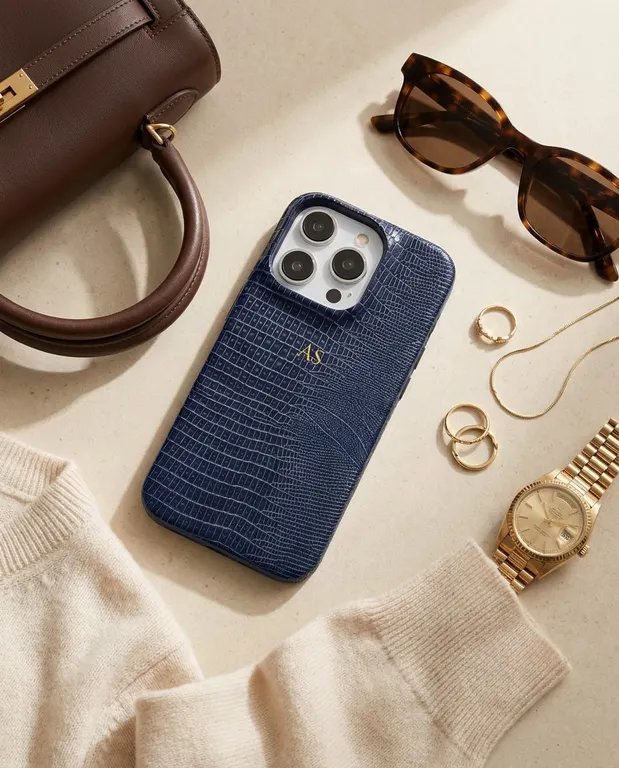
If you want a laptop sleeve whose lifespan matches heavy commuting, our laptop collection includes pieces built for that kind of use.
Does Vegan Leather Peel? Signs of Wear to Watch For
Yes, vegan leather peels when the polymer coating separates from its fabric backing, and this is the most common failure mode. Peeling starts at edges and corners, where flexing stresses the bond between layers. It is usually a construction problem rather than a sign you did something wrong.
Watch for these early signals:
- Edge lifting: the coating curls away at seams and corners
- Fine surface cracks: small lines that appear across flex points
- Colour fading: sun exposure dulls the finish unevenly
- Stiffening: the material loses flexibility and feels brittle
- Flaking: small pieces shed from the surface
Embossed initials are a separate question. If you are wondering whether monograms survive, our guide on embossed initials and leather monograms explains how depth and placement affect how long personalisation stays crisp.
Is Vegan Leather Waterproof? Moisture, Heat and British Weather
Vegan leather is water-resistant, not waterproof. PU and PVC surfaces shed rain well, which makes vegan leather a sensible choice for British weather, but prolonged soaking can seep through seams and stitching. Heat is the bigger threat. Leaving a case on a sunny car dashboard or near a radiator softens the coating and speeds up breakdown.
The risks are damp storage, such as a coat pocket or a bathroom shelf, and artificial heat. Met Office guidance on humidity and indoor damp is a useful reminder that persistent moisture, not rain, does most of the damage.
Is Vegan Leather Good Quality? How to Judge It Before You Buy
A good piece feels substantial, flexes without creasing sharply and shows tight, even stitching at stress points.
Use this checklist before buying:
- Press the surface: it should spring back, not stay dented
- Check the backing: a tight woven fabric holds shape better than loose mesh
- Look at edges: sealed or folded edges resist peeling far better than raw cut edges
- Flex a corner: sharp white creases signal a thin coating
- Read the material spec: "PU" with a stated backing beats a vague "vegan leather" label
- Check stitching density at corners and seams
If you want benchmarks, our round-up of high quality vegan leather cases shows what strong construction looks like in practice. For official guidance on material labelling and consumer rights, Citizens Advice on product descriptions is worth a read.
Care, Cleaning and Storage That Extend Lifespan
Care is simple and it adds real years, but the advice has to match the material. A method that works on PU can damage plant-based leathers, and the wrong storage conditions undo good cleaning. Below is a material-safe routine that addresses the most common causes of premature peeling, cracking and stiffening.
Routine Cleaning by Material
PU leather: Wipe the surface with a soft, slightly damp microfibre cloth, then dry immediately with a dry section of the cloth. For scuffs, a small amount of mild soap (pH-neutral, such as baby shampoo diluted in water) can be used, but rinse with a clean damp cloth afterwards and dry fully. Avoid alcohol-based cleaners, acetone and abrasive pads, which strip the coating. A common mistake is over-wetting the cloth; damp is enough, and excess water works into seams and backing.
PVC leather: PVC is more water-resistant but less tolerant of solvents. Use only water or a very mild soap solution, and avoid oil-based conditioners, which can cause the plasticiser to leach and the surface to become tacky. Dry immediately; prolonged dampness can cloud the finish.
Plant-based leathers: These vary widely, so check the maker's instructions first. As a general rule, use a dry or barely damp cloth and avoid soaking. Some plant-based coatings are more porous and can stain if liquid sits on the surface. Do not use conditioners unless the manufacturer explicitly recommends them, as oils can break down bio-based binders.
Step-by-Step Cleaning Method
- Remove loose dust with a dry microfibre cloth or soft brush.
- Dampen a separate microfibre cloth with water (or mild soap solution for PU only) and wring it out thoroughly.
- Wipe in gentle, circular motions, working from clean areas to soiled areas.
- Use a clean, dry cloth to remove any residue and moisture immediately.
- Allow the item to air-dry fully away from direct heat before storing or using.
Watch out: Never machine-wash vegan leather unless the care label explicitly permits it; the agitation and heat break down the coating-to-backing bond and cause peeling that cannot be reversed.
Storage That Prevents Peeling and Cracking
Store pieces away from direct sunlight and radiators, and give bags some breathing room rather than compressing them in a drawer. Heat is a bigger threat than most people realise: leaving a case on a sunny car dashboard or near a radiator softens the coating and speeds up breakdown. British conditions are generally kind to vegan leather, moderate temperatures, limited harsh sun and plenty of indoor use, but damp storage, such as a coat pocket or a bathroom shelf, is a real risk. Use a breathable cotton dust bag rather than a sealed plastic bag, which can trap moisture.
For bags, stuff them lightly with acid-free tissue paper to hold their shape without stretching handles. Avoid hanging bags by their straps for long periods, as this stresses the attachment points. For phone cases and wallets, rotate between items if possible to give each piece time to recover from flexing and moisture exposure.
What to Avoid
- Alcohol-based sanitisers and cleaning wipes (strip coatings)
- Acetone and nail polish remover (dissolve PU and PVC)
- Abrasive sponges and scrubbing brushes (scratch the surface)
- Oil-based leather conditioners on PU or PVC (can cause tackiness or separation)
- Prolonged soaking or machine washing (weakens backing bonds)
For a step-by-step method specific to phone cases, see our guide on how to clean a vegan leather phone case safely.
Repair and End-of-Life Options for Worn Vegan Leather
At end of life, check local recycling guidance rather than binning the piece. Many councils accept synthetic leathers with textiles, and some brands run take-back schemes. Recycle Now guidance on textiles and household waste explains what your local authority accepts.
Choosing a Personalised Vegan Leather Case That Lasts
The right case combines a durable PU surface, a tight backing and personalisation that does not weaken the material. Insignia Cases offers personalised phone cases in premium vegan leather with custom embossed initials and designer-inspired textures. If you are ready to choose a durable, personalised case, browse our personalised iPhone cases to see the finishes and initials options.
A phone case should protect your device and still look considered after a year of pocket carry. Insignia Cases builds personalised vegan leather cases with premium materials, hardwearing finishes and custom embossed initials, shipped worldwide. Get started with Insignia Cases and carry a case that keeps its finish.
Frequently Asked Questions
What is the downside of vegan leather?
The main downside is that most vegan leather is a coated synthetic fabric, so the top layer can peel or crack once it dries out or takes repeated abrasion. PU and PVC versions are petroleum-based, and they do not develop the patina that genuine leather does. Cheaper constructions also delaminate at seams and edges first. Choosing a well-made coated material, keeping it clean and storing it away from heat and direct sunlight reduces most of these problems.
What is the lifespan of vegan leather?
Lifespan varies with material, construction and use. PVC feels stiffer than PU, and newer plant-based coatings vary widely. Daily friction, sweat, sunlight and heat shorten life considerably. How long does vegan leather last also depends on construction quality: stitching, edge finishing and the backing fabric often fail before the coating does.
Does vegan leather hold up in the rain?
A light shower is usually fine because the PU or PVC coating repels water, but vegan leather is water-resistant rather than fully waterproof. Prolonged soaking can seep through seams, stitching and the backing fabric, and drying it on a radiator or in direct sun will crack the coating. If your case or bag gets wet, blot it with a dry cloth and let it air-dry at room temperature. British weather makes a quick-dry habit worth building.
Does vegan leather peel or crack over time?
Yes, peeling and cracking are the most common failure modes. The coating is bonded to a fabric backing, and repeated flexing, abrasion, oils from your hands and UV exposure gradually break that bond. Peeling usually starts at edges, corners and stress points such as where a phone case flexes to fit the device. Cracking appears where the material dries out. Keeping the surface clean, avoiding heat and choosing a case with reinforced edges slows this process noticeably.
How can you make vegan leather last longer?
Wipe it with a damp microfibre cloth and mild soap rather than alcohol or harsh cleaners, dry it away from heat, and store bags and cases in a dust bag out of direct sunlight. Rotate between cases so no single one takes all the daily wear, avoid overstuffing bags, and keep sharp objects such as keys in a separate pocket. For a phone case, remove it gently rather than wrenching it off, since the corners are where peeling starts.
Is vegan leather durable enough for a phone case?
Vegan leather provides grip, appearance and some resistance to scuffs, and the case's construction affects how well it holds up to everyday use. For details on the cases we offer, see our personalised iPhone cases.
